Privacy · 3 min read
Privacy and Compliance in Crypto: Where the Line Sits
Financial privacy is a legitimate expectation, and anti-money-laundering rules are a legal reality. How the two interact in crypto, and what that means for ordinary users.
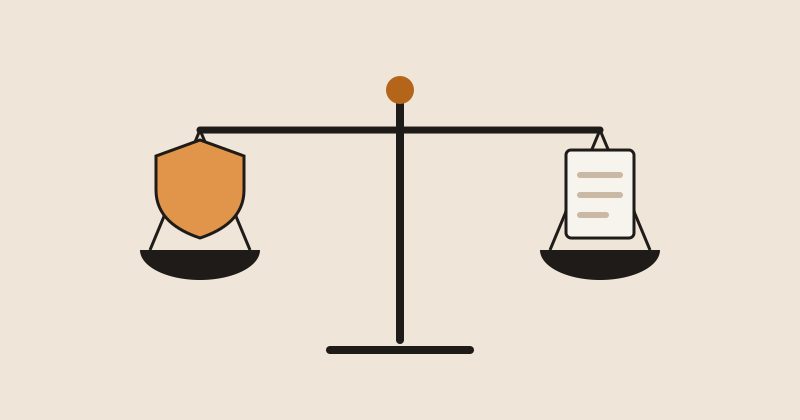
Few topics in crypto generate as much heat as the tension between privacy and regulation. One side argues that financial privacy is a basic right and that blockchains have made surveillance far too easy. The other side points to fraud, ransomware and sanctions evasion, and argues that crypto must follow the same rules as the rest of finance. Both sides are describing something real. For ordinary users, the practical question is how to protect reasonable privacy while staying clearly within the law.
The rules that apply
Most countries apply anti-money-laundering rules to businesses that handle crypto for customers, such as exchanges and custodians. The core requirement is know your customer: verifying who customers are, monitoring their activity for suspicious patterns and reporting what the law requires to the authorities.
International standards are set by the Financial Action Task Force, an intergovernmental body whose recommendations most countries adopt in some form. One of those recommendations, often called the travel rule, requires service providers to pass identifying information about the sender and the recipient along with certain transfers, much as banks do with wire transfers. In the European Union, frameworks such as the Markets in Crypto-Assets regulation add licensing and conduct rules for crypto businesses.
These rules apply to businesses. An individual sending coins from one personal wallet to another is not usually a regulated entity. But the moment funds pass through a regulated service, that service is obliged to know who you are.
What privacy is still legitimate
Compliance rules do not require you to publish your finances to the world. They require certain businesses to know their customers and report to authorities under defined conditions. That leaves a large space for ordinary privacy.
Using a new address for each payment, keeping savings separate from spending, choosing not to share your addresses publicly, running your own wallet software and protecting your network connection are all normal precautions. They resemble keeping your bank statements private or using a separate card for online purchases. Data protection laws such as the GDPR in Europe even place obligations on businesses to limit what they collect and how they use it.
Privacy-preserving technologies are also legitimate in themselves. Cryptographic tools such as zero-knowledge proofs are used by banks, governments and researchers, and some regulators have explored how they could allow compliance checks without exposing unnecessary personal data.
Where the risks begin
The line becomes difficult around tools whose main purpose is to break the link between funds and their origin. Mixing services are the clearest example. Some have been sanctioned or prosecuted in several countries, and using them can create legal exposure for users as well as operators, depending on where you live.
There is also a practical consequence. Exchanges screen incoming deposits, and funds with a history that passes through mixers or sanctioned addresses may be frozen, delayed or rejected, together with questions about where they came from. Even if your own use was innocent, explaining it can be slow and uncomfortable.
Privacy-focused cryptocurrencies sit in a grey zone that varies by country. Some exchanges have chosen not to list them in certain jurisdictions, which affects how easily they can be bought, sold or converted.
A sensible position for ordinary users
For most people, the reasonable approach has three parts. First, accept that regulated services will know who you are, and choose services that handle that data responsibly. Second, use everyday privacy habits on-chain, since the law does not require your financial life to be visible to strangers. Third, stay away from tools and services that are designed mainly to hide the origin of funds, unless you have taken proper legal advice about your situation.
The goal is the same level of privacy people expect from their bank: discreet towards the public, transparent towards the authorities when the law requires it. That standard is achievable in crypto. It simply takes a little more attention than in traditional finance, because the ledger itself never forgets.