Markets and data · 3 min read
What Large Wallets Reveal: A Beginner's Guide to On-Chain Data
The public ledger is also a public dataset. How to read the movements of large holders, what conclusions they support, and the common traps in interpreting them.
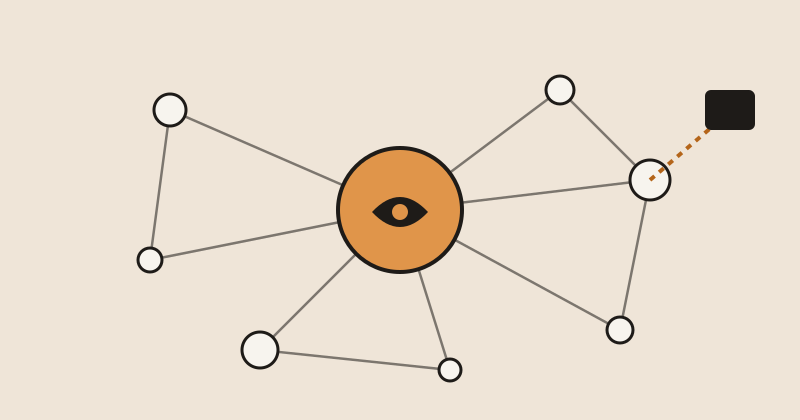
Every public blockchain doubles as an enormous, constantly updated dataset. Because every transfer is visible, anyone can watch what large holders do with their coins: when they move funds to an exchange, when they withdraw, when they split one address into many. This is what people mean by on-chain data, and it has become a field of its own.
For beginners it can look like a window into the minds of the biggest players. It is more modest than that, and more useful once you understand its limits.
Where the data comes from
On-chain data is simply the ledger, organised. Block explorers let you look up any address or transaction. Analytics platforms go further: they index the entire history, group addresses that probably belong to the same entity, and label known addresses such as those of major exchanges. The techniques behind this grouping are part of blockchain analysis, the same discipline used by compliance teams and investigators.
The labels are the crucial and fragile part. The ledger itself says nothing about who owns an address. Every label is an inference, made from public statements, observed behaviour or data shared by the companies involved. Some labels are reliable. Others are educated guesses.
What large-wallet movements can tell you
The most watched signal is the flow of coins between private wallets and exchanges. When a large holder moves coins onto an exchange, one plausible reading is that they intend to sell, since exchanges are where selling happens. When coins flow out of exchanges into private wallets, a plausible reading is that holders intend to keep them for a while.
Analysts also look at how long coins have stayed unmoved. Coins that have sat in the same address for years and suddenly move often attract attention, because they may belong to early holders. The distribution of holdings, meaning how much of the supply sits in the largest addresses, says something about concentration and about how exposed a token is to the decisions of a few parties.
For newer tokens, the ledger can reveal things the project would rather not advertise: how much the team and early backers hold, whether those holdings are locked, and whether large amounts are being moved to exchanges after a lock expires.
The traps
Every one of those signals can mislead. A transfer to an exchange address might be a sale, or it might be collateral for a loan, or the exchange reorganising its own wallets. An exchange moving funds between its hot and cold storage can look like a dramatic whale movement to anyone reading the raw data. A single "whale" might be thousands of customers whose funds are pooled by a custodian.
Timing is another trap. By the time a movement is visible and reported, the market may already have reacted, and the people who made the move knew their reasons long before. Treating on-chain alerts as trading signals tends to put you at the end of the queue.
Then there is selective attention. Dashboards make it easy to find a pattern that confirms what you already believed, especially when you look at many metrics until one of them agrees with you.
Using on-chain data sensibly
On-chain data is at its best for questions of fact. Has the team really locked the tokens they said they would lock? Is a project's treasury actually as large as claimed? Did a protocol's reserves leave the contract? These questions have answers on the ledger, and checking them is a healthy habit.
It is weaker for predicting prices. Markets are moved by many things that never appear on-chain, including activity on centralised exchanges, derivatives and broader economic news. A rule of thumb: use on-chain data to verify claims, and be careful when using it to forecast.
The privacy mirror
There is one more lesson hidden in all this. Everything analysts can learn about large wallets, they can also learn about yours. The same tools that track a fund's movements can track a salary payment, a savings address or a donation. Reading on-chain data for a while is one of the most effective ways to understand why pseudonymity on a public ledger offers limited protection, and why careful address habits matter for ordinary users as much as for whales. For the basics, start with what privacy really means on a public blockchain.