Tokenization · 4 min read
Tokenized Real-World Assets (RWA): A Plain-English Guide
What it means to put a bond, a building or a royalty stream on a blockchain, which parts the token handles, and which parts still depend on contracts, courts and custodians.
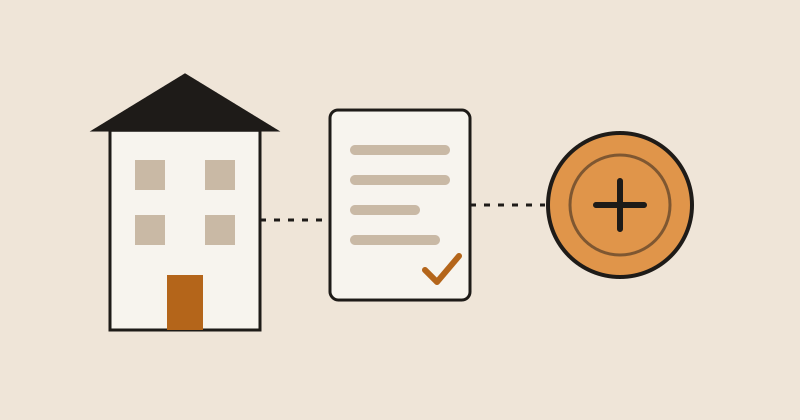
Tokenized real-world assets (RWA) are one of the most discussed ideas in finance and crypto, and one of the most often misunderstood. The short version is this: a token on a blockchain is used to represent a right to something that exists outside the blockchain, such as a government bond, a share of a property or the income from a set of royalties, an area we look at in the long tail of tokenization. The token makes that right easier to record, transfer and divide. The right itself still lives in the ordinary legal world.
That distinction is the key to understanding everything else in this guide, so it is worth keeping in mind as we go.
What a token actually is
On a blockchain such as Ethereum, a token is an entry in a program called a smart contract. The contract keeps a list of addresses and how many units each one holds, and it defines rules for moving units between addresses. Common standards such as ERC-20 make sure that wallets and other software know how to display and transfer these units.
Nothing about that list is magical. It is a register, much like the register of shareholders a company keeps, except that it is maintained by a public network, updated in minutes and readable by anyone.
Connecting the token to the asset
A token only represents a real-world asset because a legal arrangement says so. Typically an entity holds the underlying asset: a fund holds the bonds, a special-purpose company holds the building, or a rights holder signs over a share of royalty income. That entity then issues tokens and commits, in a written agreement, to treat token holders as the people entitled to the corresponding rights.
The agreement answers the questions the code cannot. Who is responsible for looking after the asset? What happens if the issuer goes bankrupt? How are payments calculated and when are they made? Can a token holder ask a court to enforce the arrangement? If those answers are weak or missing, the token is weak too, however elegant the smart contract may be.
This is why serious RWA projects spend as much effort on lawyers, custodians and auditors as on developers. The blockchain is the record-keeping layer. The legal structure is what gives the record its meaning.
Why bother putting it on a blockchain
If the legal work is still needed, what does the blockchain add? A few concrete things.
The first is settlement. Transferring a traditional financial asset can involve several intermediaries and take days. A token transfer is final once it is confirmed on the network, usually within minutes, at any hour.
The second is divisibility. A building or a large bond is hard to split among many small holders using traditional paperwork. A token can be divided into tiny units with no extra administrative cost, which opens access to assets that used to require large minimum amounts.
The third is programmability. Because the register is a program, distributions can be calculated and paid automatically, usually in stablecoins, transfer restrictions can be enforced in code, and the whole history is auditable by anyone who wants to check it.
The fourth is composability: tokens that follow common standards can be used by other applications, such as wallets, payment systems or accounting tools, without custom integrations for each one.
What tokenization does not change
Tokenization does not make a poor asset good. A building with no tenants is still a building with no tenants when it is represented on-chain. It also does not remove the need to trust the issuer and the custodian. If the entity holding the asset behaves badly, the token holder's protection comes from the legal agreement and the courts, exactly as it would off-chain.
Liquidity is another common misunderstanding. A token can be transferred quickly, but that does not guarantee that anyone wants to buy it. Many tokenized assets can only be transferred between approved holders, which limits the pool of potential buyers. Being transferable and being easy to sell are different properties.
Finally, regulation still applies. In many jurisdictions a token that represents a financial right is treated like the financial instrument it represents, with the same rules on who may issue it and to whom. Frameworks such as the European Union's Markets in Crypto-Assets regulation are part of a broader effort to clarify where these lines sit, a subject we return to in privacy and compliance in crypto.
Questions worth asking about any RWA token
When you come across a tokenized asset, a handful of questions will tell you most of what you need to know. Who legally holds the underlying asset, and where? What document defines the rights of token holders, and can you read it? How and in what currency are payments made? What happens to holders if the issuer disappears? Who checks that the asset exists, and how often?
Clear answers to those questions matter far more than the choice of blockchain or the design of the token. Tokenization is a better filing system for ownership. Like any filing system, it is only as reliable as what is filed in it.